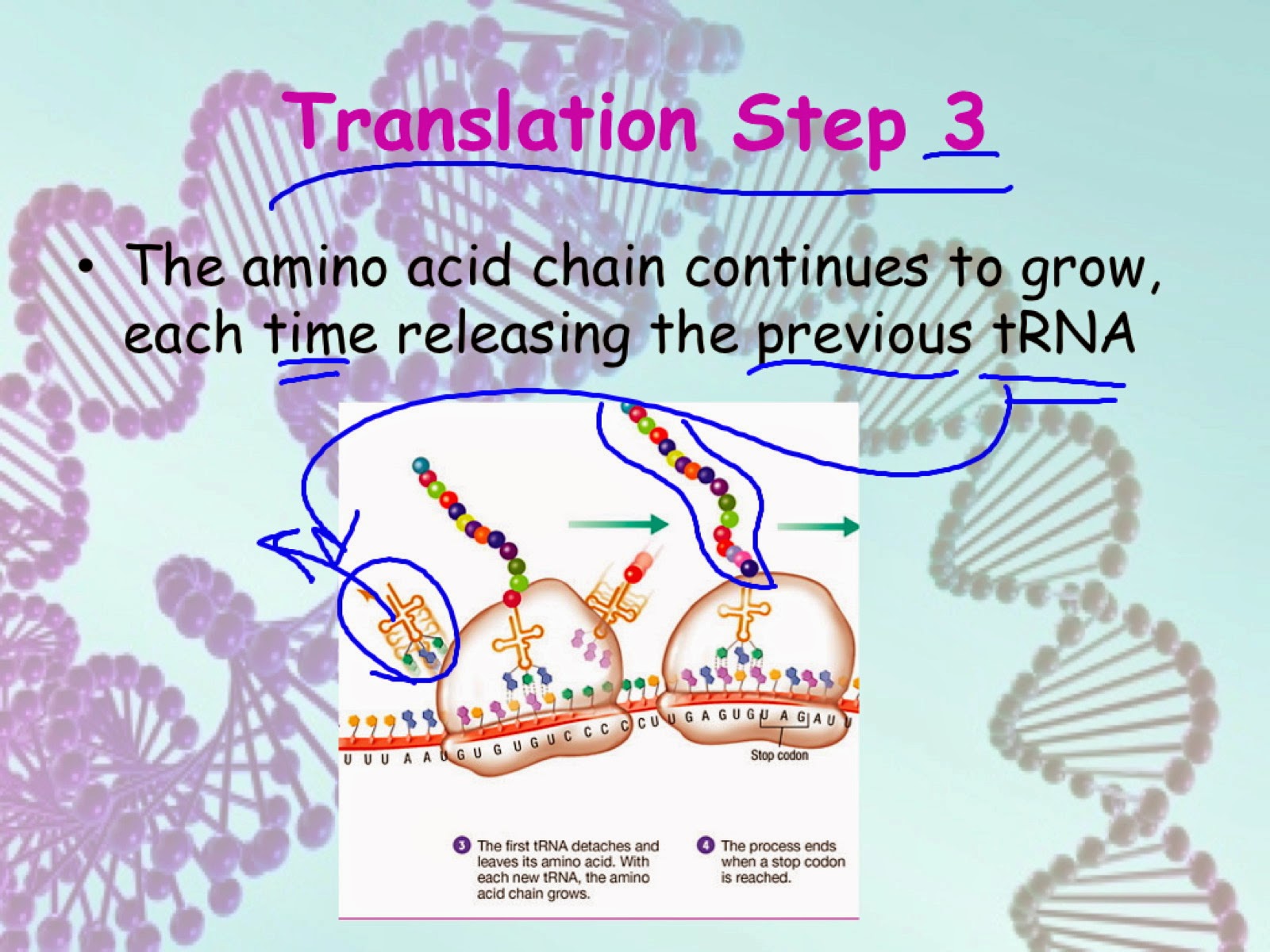
Monday we took out daily question quiz and then
went into the following daily question which both wraps up translation AND leads us into the next section which is mutations:
screen cast of our discussion:
we continued through transcription using our models. i have included ALL notes about translation for you here:
Well..... today i was a super scatterbrain and left my PC at home which means.... NO DQQ today, it will be on MONDAY!! so instead we did the following daily question (which happens to be directly from the daily question quiz that you will be taking monday)
a screencast of our discussion that went along with it:
we did a quick review of transcription and then moved right into the notes and activity involved with translation:
we used our models to get transcription started.
For most of you this is as far as we got. We will continue through translation on monday after the daily question quiz!!!!
After going through the daily questions i reviewed what we did yesterday with the K'nex models and you worked through a worksheet that both wrapped up transcription but also compared and contrasted DNA Replication with transcription.
If you still need help with transcription the following video should help!!!
To work through an interactive site about transcription i encourage you to go to the link found below the picture
This slide was not added to your notes but instead was to supplement the notes you got from the book!!
We watched the beginning of the following video that shows transcription in real time before we went ahead and started going through transcription with our Knex Models:
K'nex Models:
The DNA is Unzipped by RNA polymerase and nucleotides were added. In the mean time, The DNA is being zipped back up behind it.
At the end we have our original DNA double helix (on the right) left unchanged and an mRNA molecule that can leave the nucleus and head to the cytoplasm
While we did get into some notes on gene expression, the main goal of today was to introduce you to some similarities and differences between DNA and RNA. We started with the following daily questions:
Then we started into the notes to prep us for our transcription activity tomorrow:
Differences between DNA and RNA Explained:
The rest of the period was to be used to continue reading through this section of the book and working on the directed reading. We will get into Transcription in detail tomorrow!!
We started into our next chapter on gene expression today with the following daily questions:
You then watched the following intro videos The first one we watched before when learning about the structure of DNA. As before.. I would change the words from "makes proteins" to "Codes for proteins" This chapter will be focusing on the transcription/translation portions.
The next was a crash course. While we will be going through transcription and translation we will NOT get into protein folding or RNA splicing in the detail that he goes into.
Finally, the rest of the period you read through the section in the book and got down some new terms to help you get familiar with them before we dive head first into this!!!
Today we went through as many of the study island questions as we could together as a class to review for our exam tomorrow. Remember, you guys have access to this. The more you practice the more likely you are to do well on the test tomorrow.
When you go to study island click on the "heredity review" assignment under your biology assignments. (username firstnamelastname.ecasd password: probably your student ID or whatever your changed it to!!!)
Some of the questions we did in class (and associated work) are found below:
Sample Open Ended Questions: 1. When you go to the doctors you are asked for your own medical history and that of your family. This is so that the medical personnel can determine your risk factors for certain genetic disorders. This allows them to do TWO things, both make sure to test you early for a disorder you may in fact have but have not yet shown symptoms for AND to give you advice on how to prevent the onset of some disorders. Describe below both of the situations. 1st describe why a doctor would be concerned about the risk of you having a recessive disorder even if neither of parents have that disorder but some of your aunts and uncles do???? 2nd describe why even if you have the genes for a disorder, living a certain lifestyle could prevent you from actually having those genes expressed? (in this case I am looking for a explanation about how cellular environment affects gene expression)
2. Mr and Mrs Smith have devised a plan to make some money. They know that type O blood is a hot commodity so they are planning on conceiving children until they have one with type O blood and then have that child be its own personal "blood bank" shall we say. (not very ethical, I know.... but...... its a tough economy right???) Mrs. Smith has blood type A. Her father has blood type A, and her mother has blood type B. If Mr. Smith has blood type AB (Both of his parents have type AB blood). They go to a genetic counselor to see their chances. As their genetic counselor you are obligated to go over Mr & Mrs. Smith's Genotype, Both of their parents genotypes and therefore they can give them the probability that they will have a child with type O blood. Describe what you would tell them about their chances of having a type O child and WHY (include ALL genotypes Mr/Mrs. smith, both their parents, possible genotypes of offspring) still confused about blood type genetics??? check this out:
3. Color blindness is an x-linked recessive disorder. A man who is color blind has a child with a woman who is not color blind. Their first son is not color blind, their second son is and they are hoping for a little girl to complete their family. What are the chances they will have a girl that is color blind? (when doing this make sure to include all information about both parents, the two boys and the possible outcome of girls)
***confused about xlinked disorders? check this video out:
Happy Studying Guys!!! I KNOW this is how you are feeling right now... but...... It's almost OVER :)
I had to take a little break from updating this due to having the flu/bronchitis... sorry about that guys!!! Instead of attempting to go back and make a post for EVERY day I've missed on the blog we'll just start fresh. On this post I will put the daily questions from the last couple days and the notes we have been going over.
Monday March 10th- no daily questions you worked on your Directed readings and answered questions at the end of the chapter in the book. Tuesday:
Today (Wednesday): Watch and see!
Over the past couple days we have gone through complex forms of inheritance such as polygenic inheritance, incomplete dominance, codominance, multiple alleles etc. You have been following along with your directed reading packet and filling in where needed. Here are the slides and videos to help explain:
A good video that shows ALL Of these is found below. If you missed any of these days or are still confused on any of these I HIGHLY recommend this video.
The beginning of the video below does a GREAT job of describing Polygenic inheritance. It then ALSO shows X-linked traits in a great way. Don't worry about the mitochondrial DNA genetics stuff!!!
Specific video on incomplete and codominance
The following video does a really great job of epistasis which is how genes interact with EACH OTHER. At the same time though, it describes how the genes for a particular enzyme are denatured at particular temperatures.
Today we started with the following daily question:
a video of my discussion of this is here:
I then gave you time to finish the inventory of your traits and turn that in. We then looked back at the punnett square video from yesterday and added a little bit to your notes.
Friday february 26th we had our Intro to heredity dqq and then started into the inventory of our traits. some of the traits we looked are found below:
Monday March 4th I had you watch a series of videos that went along with this chapter. The first was the crash course Meiosis. This was to remind you of what the products of meiosis are and how that determines the traits you will pass on to your offspring.
the next was just a little look at the work of Gregor mendel and how that has influenced our understanding of genetics to this day
Next was the next crashcourse about heredity. This basically summarized all we did last week and reviewed terms such as homozygous, heterozygous, dominant, recessive, etc. He also got a little in to punnett squares.
Finally you went through the khan academy video and once he starts making new punnett squares i had you put what he was doing into your notebooks.