

Well ANYway - check Edline if you missed the notes!


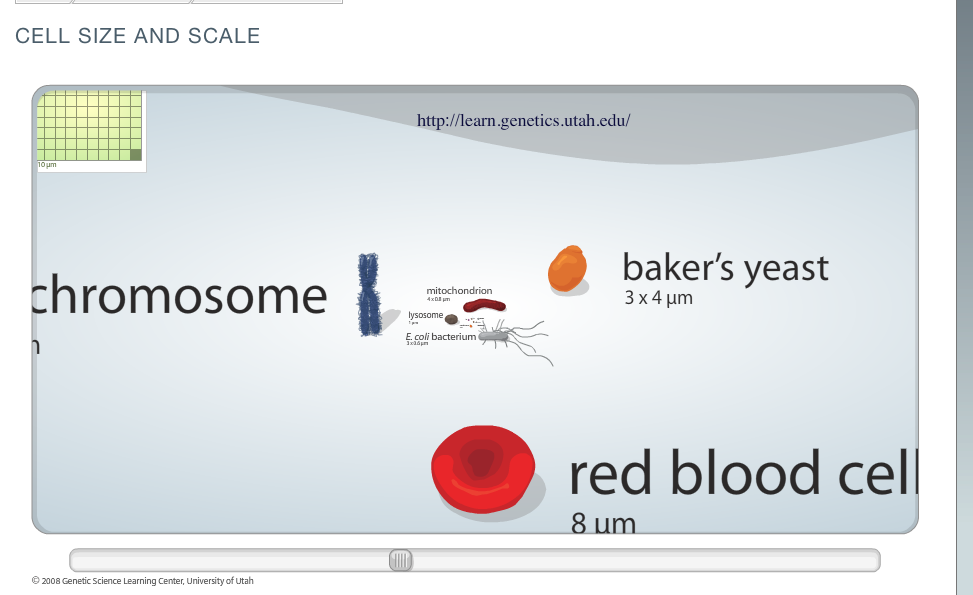
I look under a microscope and see rigid cell walls and green structures inside cells. Because of this what can I infer about the cell?
That it is most likely a plant cell. Just the presence of a cell wall does not automatically make it a plant cell because bacteria also have cell walls. The presence of the chloroplast does that indicate that it is a plant cell.
Some disorders are caused by a lack of lysosomes in the cells of a particular tissue, what would result from this? (what would happen in the cell?)
Since lysosomes aid in breaking down cellular "junk" and removing it from the cell the lack of those would cause a build up of wastes and the cell would become "toxic"
If the golgi apparatus was out of order in a cell, what would the direct result of that be regarding protein production and transportation?
Since the golgi apparatus is responsible for putting finishing touches on proteins that were made in the rough endoplasmic reticulum, it these were out of order protein that were meant to be shipped out of the cell would not.
|
 |
| This was bacteria. they were VERY Hard to see under our microscopes because they are SOOO small!! |
 |
| There were leaf cells |
 |
| Liver Tissue (Notice the purple dots are the nucleus and they are surrounded by pink "fluid." That would be the cytoplasm which is stained so that we can see it.) |
 |
| Lung tissue. Notice how much space surrounds these cells these are pockets for air to be trapped. |
 |
| This is a similar image to the pine stem you looked at. Most notable features here are the large central vacuoles and the very present sturdy cell walls. |
 |
| This was the heart muscle. These are very hard to see but again, the purple dots are the nuclei. |
 |
| This was the image of cork. Our cork slide was pretty old so there was a lot of "damaged" parts to the cork. What you were to be looking at where these finer features. |

 |
| Liver Cells |
 |
| Kidney Cells |
 |
| Lung Cells |



|
Which statement BEST explains
why large changes in pH can affect the functions of plant enzymes?
A. Large
changes in pH increase the rate of biochemical reactions
B. Large
changes in pH provide the energy necessary to activate an enzyme
C. Large
changes in pH can denature an enzyme causing a change in its shape
D. Large changes in pH can cause an enzyme to
lower the activation energy
|
|||
|
Without enzymes, the chemical reactions in our body woul
|
a.
Happen too quickly C. require a different pH
b.Occur
at the same rate as they do now D.Occur
too slowly to support life processes
|
||
|
An enzyme
|
a. Provides
extra energy for a reaction
c. Eliminates the activation
energy of a reaction
b. Lowers
the activation energy of a reaction d.
allows irreversible reactions to occur
|
||
|
Which of the following statements about enzymes is FALSE?
|
a. are
usually proteins c. reduces the activation energy of
chemical reactions
b. can
only catalyze a reaction once d.
are greatly affected by pH and temperature
|
||
|
Substance A is converted to substance B in a metabolic
reaction. Which statement BEST
describes the role of an enzye during this reaction?
|
A. It adjusts the pH
of the reaction medium
B. It provides
energy to carry out the reaction
C. It dissolves
substance A in the reaction medium
D. It speeds up the
reaction without being consumed
|
||


 |
| Test tube 1 placed at 5 degrees
Celcius, 2 kept at room temp and 3 placed in the incubator at 37 degrees Celcius (body Temp) |
 |
| You can see that the one placed
in ice is still a dark blue color while the room temperature is a very pale blue and the body temperature one is completely clear (meaning there is NO starch left!!) |
 |
| Set up |


 |
| How to be like Rocky questions (not the write up yet) |
 |
| Evaluation of students |


Row
|
Metabolic Activity A
|
B
|
1
|
Respiration
|
Oxygen molecules
|
2
|
Reproduction
|
Hormone Molecules
|
3
|
Excretion
|
Simple Sugar Molecules
|
4
|
Digestion
|
Amino Acid Molecules
|
row
|
A
|
B
|
C
|
1
|
Large
|
Simple Sugars
|
Amino Acids
|
2
|
Small
|
Simple sugars
|
Amino acids
|
3
|
Large
|
Amino acids
|
Simple sugars
|
4
|
Small
|
Amino acids
|
Simple sugars
|

